Design system for enterprise job architecture, from tokens to AI agent spec.
Role
Design Systems Lead
Collaborators
Head of Design, Founder, 1 PMM, 3 Engineers
Tools
Figma, Paper, Cursor, Storybook
Timeline
6 months (2025 – 2026)
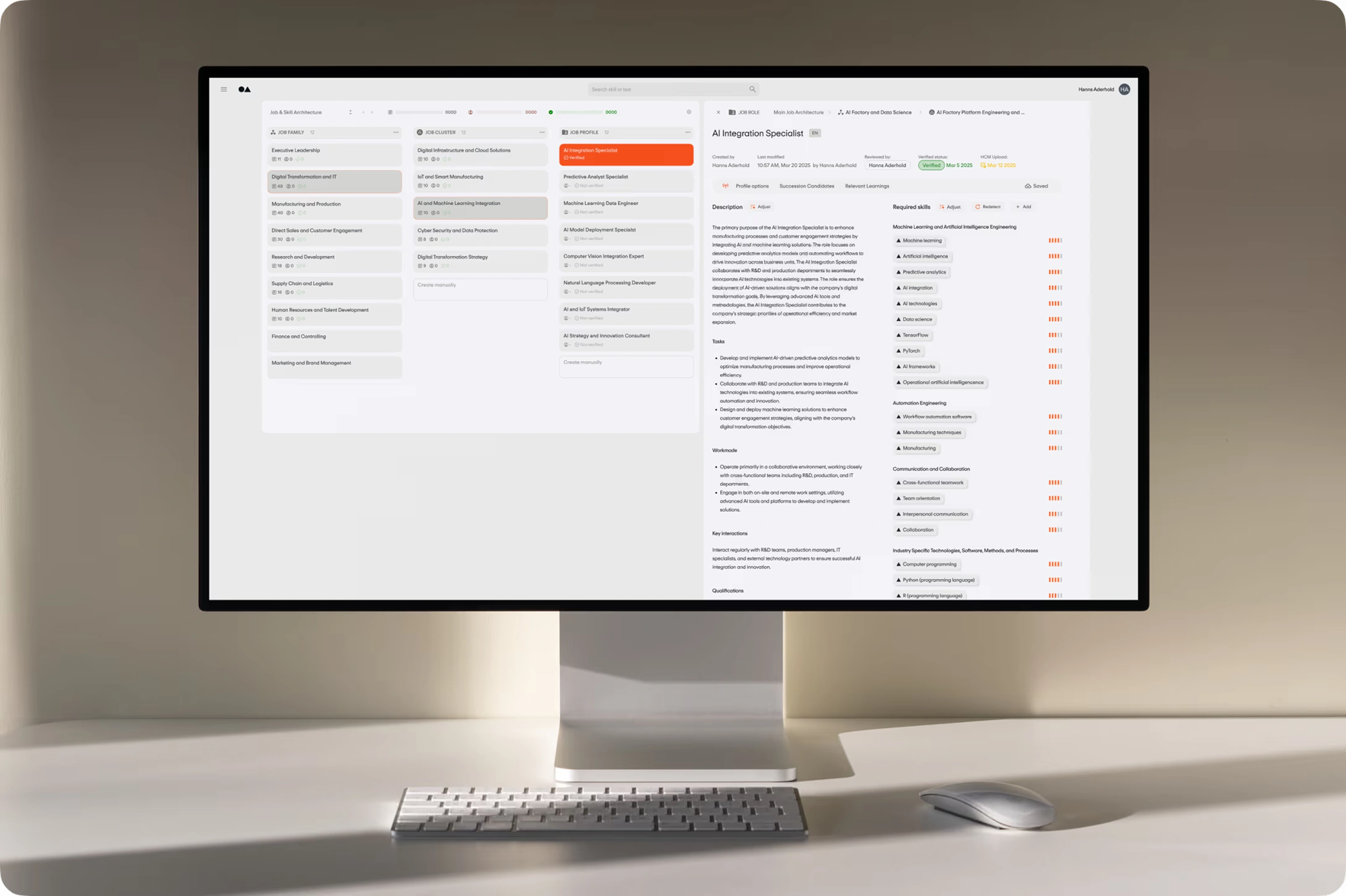
Cobrainer builds job and skill architecture for enterprises: the map of every role, level, and skill a company runs on. I joined to operationalize a design system Neil Heiland, the Head of Design, had brand-revamped so the team could build against it. Partway through, the company moved to AI agent tooling and I rewrote the system as design.md, a spec agents read directly. That let me prototype in code and bring working screens to meetings.
Getting off Material UI defaults
Material UI gave the team a starting point but not a shape. Engineers filled every gap with a local override, and a five-level skill hierarchy broke in a generic kit. The rebuild moved the base palette to monochrome with semantic tokens over it, which turned a white-label client swap into a config change.
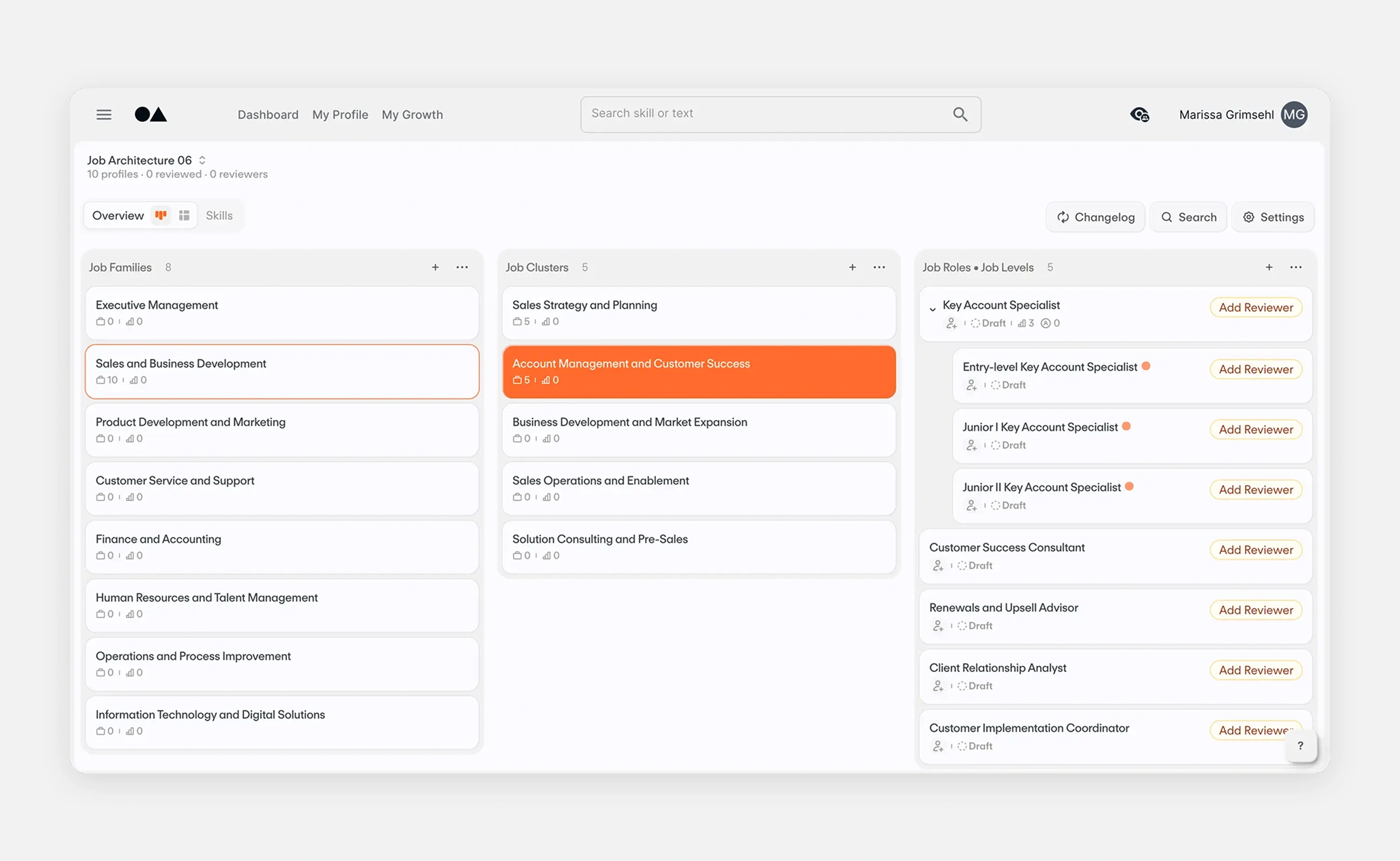
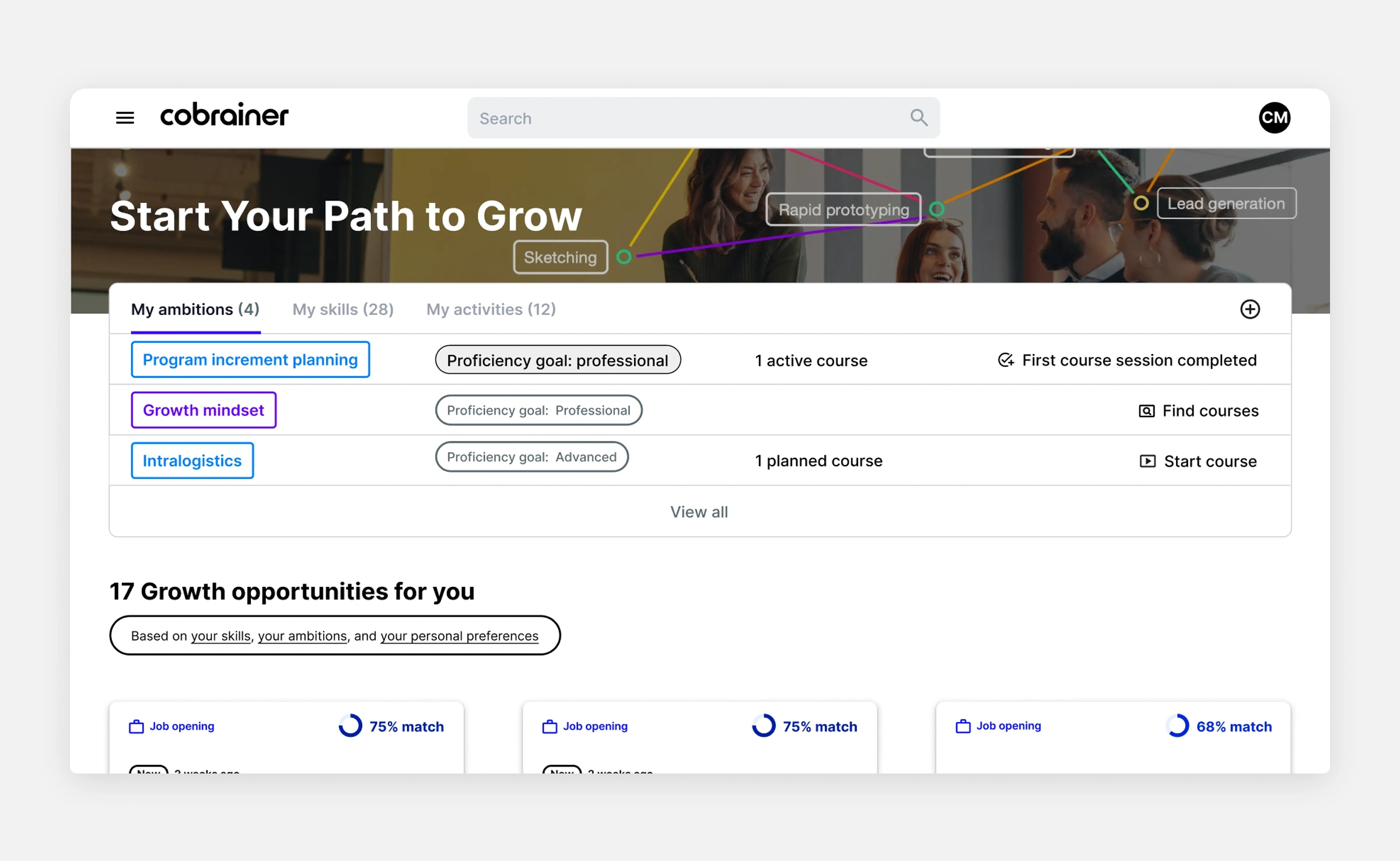
Drag to compare. Left is Material UI, right is the revamped system.
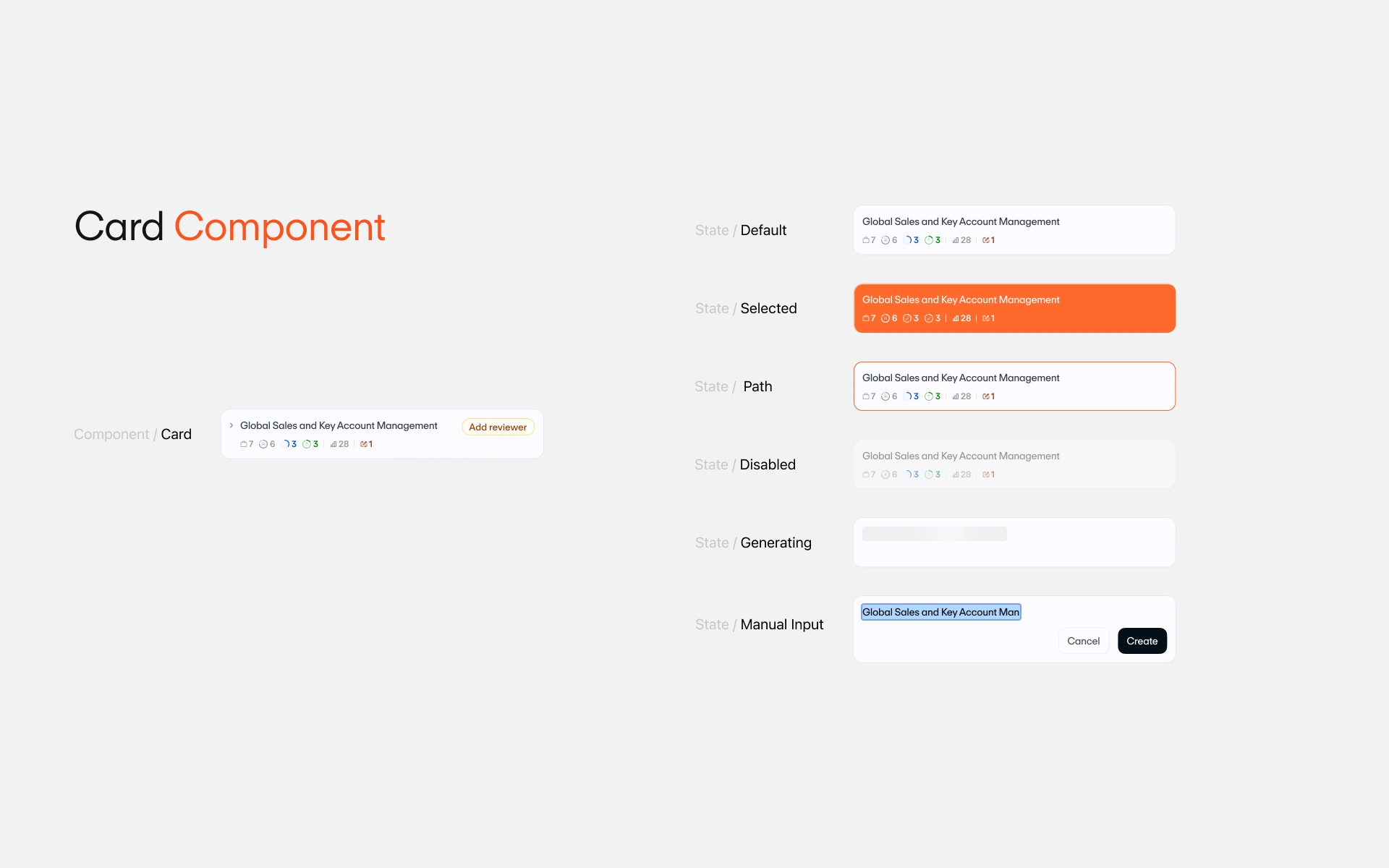
The card component
The card is what the whole architecture is built from. It carries six states, and two exist only because this is an AI product: Generating, for a role mid-creation, and Manual Input, for when someone overrides what the AI produced.
Generating a job architecture
Upload company data, choose how much the AI decides, then review what it built. The control choice comes first: full-automatic, or manual framework selection with the AI filling the rest. Every generated role carries a reviewer badge, and nothing is final until a person signs off.
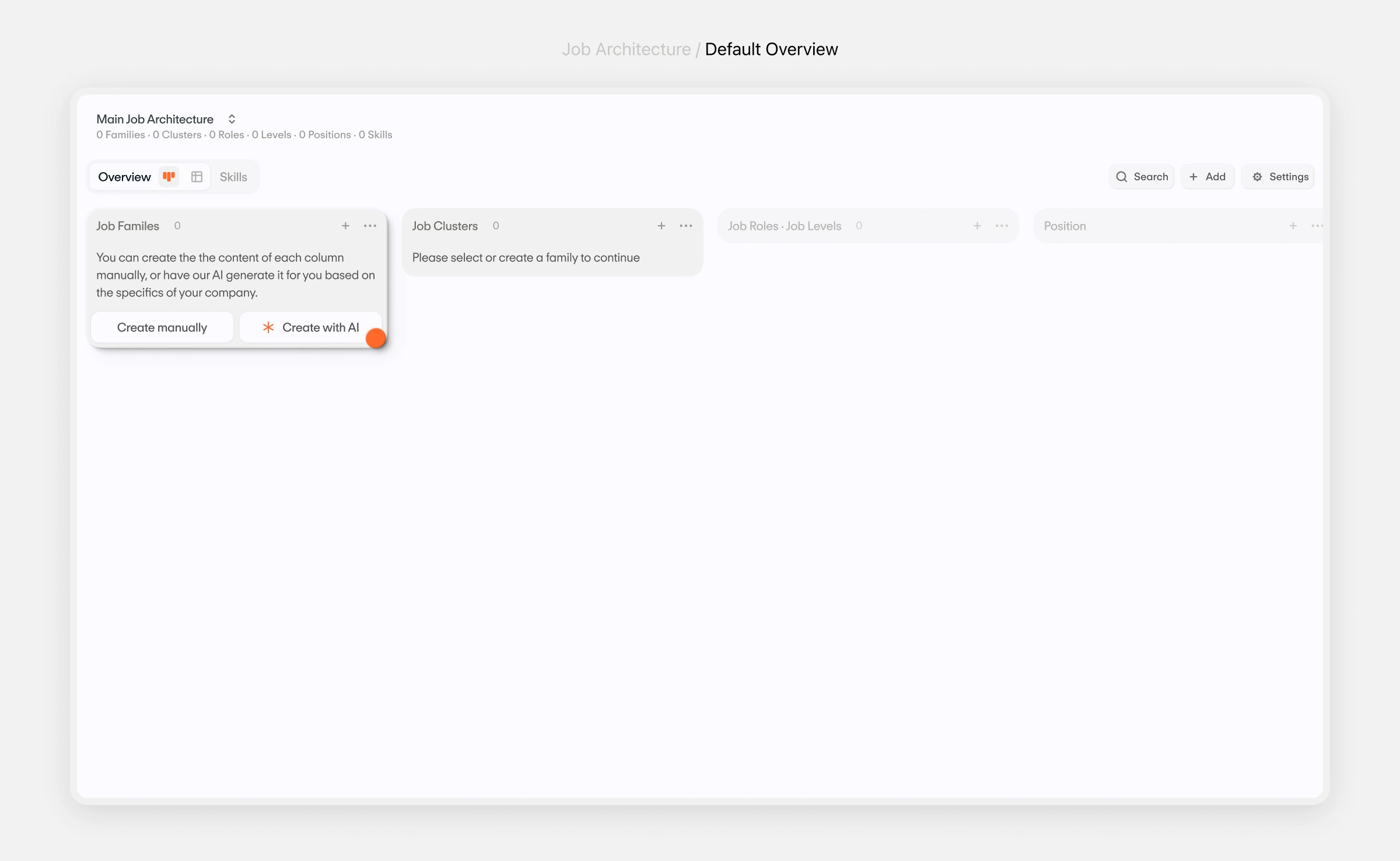
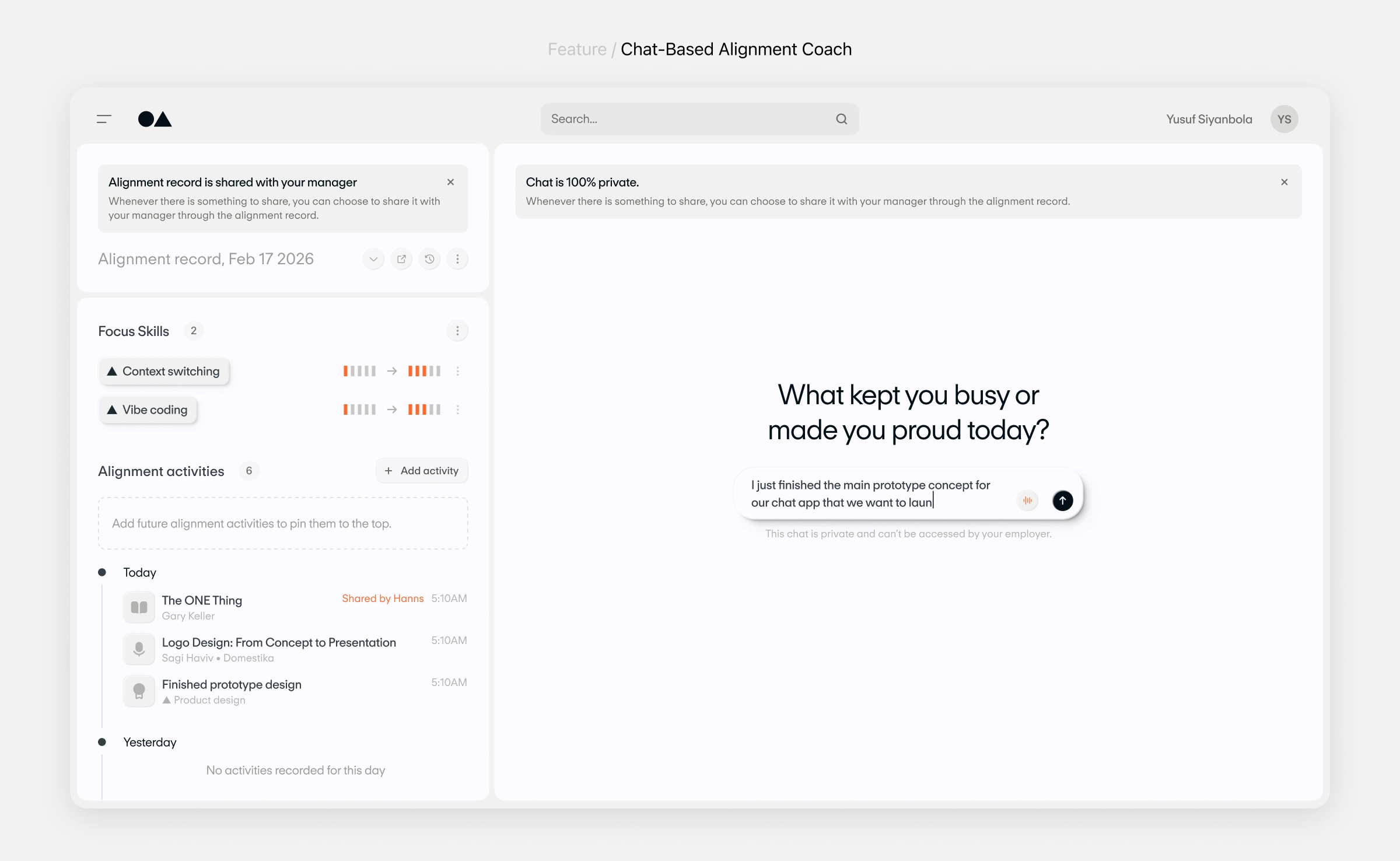
Search, changelog, and the alignment coach
Faceted search, a changelog with version comparison, and a chat-based alignment coach, all built from the same components and tokens. List views toggle the same data into a table, which tested whether the tokens held under a different layout.
Once the system was a spec rather than a set of files, the people who needed changes stopped waiting on design to make them.
2 weeks to 2 days
Handover cycles
Zero
Migration downtime
One config
White-label swap
Cobrainer’s product trailer.
Cobrainer shipped its 2026 Summer Release after I left. Personal Agent, Commenting, and Dashboard all run on the same system.